
With more than one billion people worldwide living with obesity, the condition increasingly intersects with acute and critical illness. Among the most serious of these intersections is acute respiratory distress syndrome (ARDS), a life-threatening condition requiring complex ventilatory management and multidisciplinary critical care.
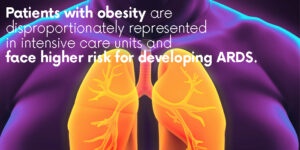
Patients with obesity are disproportionately represented in intensive care units and face higher risk for developing ARDS due to altered respiratory mechanics, chronic inflammation, and comorbid disease. As ARDS incidence rises globally, particularly following the COVID-19 pandemic, healthcare systems must confront not only how obesity affects disease severity but also how to deliver evidence-based therapies safely, consistently, and equitably for patients across a wide range of body sizes.
ARDS is characterized by diffuse alveolar damage, severe hypoxemia, and decreased lung compliance. In patients with obesity, these challenges are compounded by physiologic factors including reduced functional residual capacity, increased chest wall elastance, and higher intra-abdominal pressure. These changes contribute to atelectasis, impaired gas exchange, and increased ventilatory demand.
Obesity is also associated with a higher likelihood of requiring mechanical ventilation and longer ICU length of stay once ARDS develops (Papazian et al., 2019; De Jong et al., 2020). While some studies suggest an “obesity paradox,” in which patients with higher BMI demonstrate similar or even lower short-term mortality, this does not negate the operational complexity, resource burden, and safety risks associated with caring for patients with obesity in the ICU (Ball et al., 2021).
Critically, these challenges are not purely physiologic. They intersect with care delivery limitations, including equipment constraints, staffing demands, and variability in clinician comfort with advanced positioning strategies for patients with higher body weight.
Prone positioning is a cornerstone therapy for moderate to severe ARDS. When applied early and for sufficient duration, prone positioning improves oxygenation, enhances dorsal lung recruitment, reduces ventilator-induced lung injury, and lowers mortality (Guérin et al., 2013; Fan et al., 2020). Current guidelines recommend prone ventilation for patients with severe hypoxemia despite optimal ventilator settings.
Despite its strong evidence base, prone positioning remains underutilized, particularly in patients with obesity. Studies consistently show that patients with higher body weight are less likely to be proned, even when meeting clinical criteria (Kallet, 2021). Barriers include concerns about staff injury, airway dislodgement, pressure injuries, hemodynamic instability, and the significant manpower required for manual repositioning.
Ironically, emerging evidence demonstrates that patients with obesity derive similar physiological benefit from prone positioning as non-obese patients, with comparable improvements in oxygenation and lung mechanics when proning is performed safely and correctly (De Jong et al., 2020; Ball et al., 2021). This gap between evidence and practice highlights a critical equity issue in ARDS care.
Traditional prone positioning requires coordinated effort from multiple clinicians and nurses, often six or more staff members, especially for patients with higher body weight. Manual proning increases the risk of musculoskeletal injury to healthcare workers and may limit the frequency or duration of prone therapy, particularly during staffing shortages or high-acuity surges.
For patients weighing 300 to 400 pounds, these challenges are magnified. Manual methods may lead to delayed proning, shortened prone sessions, or avoidance altogether, not because of clinical contraindications, but because of logistical and safety constraints. This creates variability in care delivery and contributes to unequal access to a therapy known to improve outcomes in ARDS.
The Pronova-O2™ Automated Prone Therapy System was developed in response to these real-world challenges. Grounded in extensive research and designed with direct input from experienced critical care nurses, the system provides a safer, more standardized alternative to manual prone positioning.
Importantly, the Pronova-O2™ system is designed to support patients weighing up to 400 pounds, addressing a critical gap in ARDS care for patients with obesity. By automating the prone positioning process, the system reduces reliance on large care teams while maintaining patient alignment, stability, and comfort.
The Pronova-O2™ Automated Prone Therapy System is designed to deliver three integrated therapeutic modalities that support safe, consistent, and patient-centered positioning in the critical care setting. First, the system provides automated prone therapy, enabling patients to be moved into and maintained in the prone position in a controlled and reproducible manner without the need for manual lifting by healthcare staff. In addition, the system offers prone therapy with continuous lateral rotation, which helps promote pulmonary recruitment, improve ventilation–perfusion matching, and redistribute pressure to reduce the risk of pressure-related complications. Finally, Pronova-O2™ includes supine rotational therapy, allowing for gradual and controlled positional changes when full prone positioning is not clinically indicated or during periods of recovery and transition. Together, these capabilities allow clinicians to individualize positioning strategies based on patient condition while minimizing staff injury risk, reducing variability in care delivery, and supporting longer, guideline-concordant prone therapy sessions.
World Obesity Day emphasizes that obesity is shaped by social and structural determinants, and these same inequities extend into critical care. Patients with obesity may experience delayed interventions, fewer evidence-based therapies, or unintended bias in clinical decision-making. When life-saving treatments such as prone positioning are inconsistently applied due to body size or resource limitations, disparities in outcomes are reinforced.
Technology alone does not solve inequity, but equitable access to enabling technologies can help close care gaps. Automated prone therapy systems like Pronova-O2™ offer an opportunity to standardize care delivery regardless of patient size, staffing variability, or clinician experience. By supporting safe proning for patients up to 400 pounds, these systems help ensure that obesity does not become a barrier to receiving guideline-recommended ARDS therapy.
Equity in this context means designing systems that work for the full spectrum of patients seen in modern ICUs, not only those who are easiest to manage.
As World Obesity Day calls for global action, the critical care community must address how obesity intersects with severe respiratory failure and ARDS. Patients with obesity face unique physiological and logistical challenges, yet evidence shows they benefit from the same life-saving therapies as other patients when those therapies are delivered safely and consistently.
The Pronova-O2™ Automated Prone Therapy System represents an important step toward more equitable ARDS care, supporting prone therapy for patients up to 400 pounds while reducing caregiver burden and improving consistency. As obesity prevalence continues to rise, innovations that prioritize safety, dignity, and access will be essential to improving outcomes for all critically ill patients.