While the physiological benefits of proning are clear, the physical mechanics of manually turning a surgical patient present a daunting clinical dilemma: How do we gain the pulmonary benefits of prone positioning without compromising fresh sternal incisions or exhausting ICU staff?
The Evidence for Prone Positioning in Transplantation
The clinical rationale for proning transplant patients and organ donors is heavily supported by recent literature:
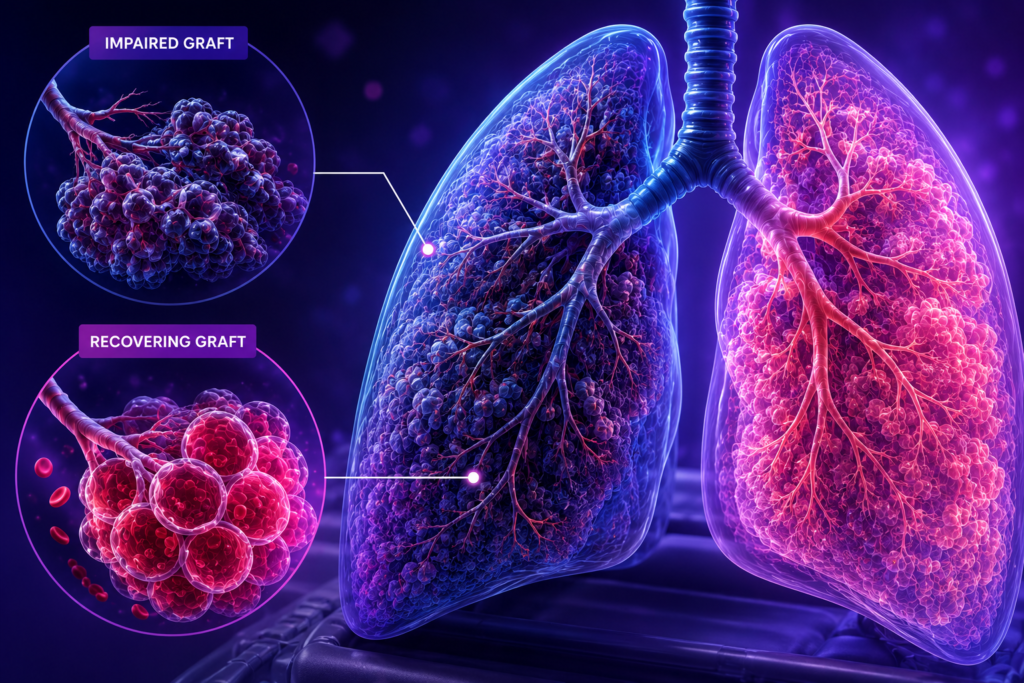
- Recipient Graft Recovery: A study by Frick et al. (The Effect of Prone Positioning After Lung Transplantation) analyzed 583 lung transplant recipients and found that prone positioning significantly improved
ratios and lung compliance within 24 hours for patients suffering from severe early graft dysfunction.1
- Donor Salvage: In organ donor management, research by Marklin et al. showed that placing brain-dead organ donors in the prone position reversed atelectasis, rapidly increased oxygenation, and ultimately allowed for significantly more lungs to be harvested and successfully transplanted.2
The Reality: Sternal Dehiscence and Microclimate Failure
Despite these compelling outcomes, manual proning in the post-transplant setting carries inherent risks. A notable clinical follow-up letter (Risk of Wound Complications With Proning After Lung Transplantation) highlighted a sobering reality: manual log-rolling of fresh post-transplant patients can result in sternal wound dehiscence, requiring complex surgical revisions and, in severe cases, up to two years of recovery.3
Furthermore, face and chest tissue breakdown remains a persistent issue. During prolonged prone therapy, the combination of pressure, heat, and moisture accumulation on the chest and face accounts for the vast majority of hospital-acquired pressure injuries (HAPIs) in proned patients4.
The Automated Solution: Pronova-O2® and InteliDerm®
To eliminate these mechanical barriers, automated positioning technology has emerged as a crucial standard of care.
- Precision Motion without Shear: The Pronova-O2® Automated Prone Therapy System rotates patients continuously and smoothly. By controlling the center of gravity and eliminating manual weight-shifts, the system prevents the shear force and sudden mechanical stress on thoracic incisions that lead to wound dehiscence.
- Microclimate Control with InteliDerm®: To protect the highest-risk pressure points, the InteliDerm® Powered Skin Protection System delivers active airflow across the face pack and chest wedge. By actively pulling away moisture (removing up to 10x more than standard foam) and maintaining cooler skin temperatures, InteliDerm® preserves tissue integrity over 16+ hour proning sessions5.
- Clinical & Operational Validation: As recently highlighted in The Journal for Bariatric Solutions (May 2026), automated proning systems allow complex, high-BMI, and post-surgical patients to receive necessary prone therapy safely—with zero nurse injuries and no requirement for additional staffing teams6.
Bridging the Gap in Transplant Medicine
The evidence is clear: early prone positioning saves grafts and expands donor availability. By automating the process with Pronova-O2® and InteliDerm™, healthcare systems no longer have to choose between pulmonary recovery and surgical site integrity.
To learn more about implementing automated prone positioning in your transplant ICU or organ procurement workflow, visit www.turnmedical.com.