Five keys Pronova-O2 can play in the role of nurse retention
By Tara Psencik, BSN, RN, Chief Clinical Officer
The past few years have sharpened the focus on one of healthcare’s biggest challenges: nurse retention. As leaders from Mercy, WVU Medicine, University of Maryland Medical System, Advocate Health, Providence, Sinai/Grace, and Ohio State Wexner have all acknowledged in recent observations reported by Becker’s1, the pressures on nurses have grown, including post-pandemic emotional fatigue, rising patient acuity, administrative burdens, and generational differences in expectations.
To respond to these pressures, many health systems are looking toward innovation and technology not just as add-ons, but as foundational tools to make nursing work sustainable, more satisfying, and more aligned with what frontline caregivers need.
Here’s a look at what’s changing and how an automated prone therapy system like Pronova-O2 can contribute meaningfully to nurse retention and recruitment.
What Nurse Leaders Are Saying
- Emotional resilience & reducing fatigue: Nurses are stretched thin emotionally and physically. Mercy has invested in holistic support systems—mental health, peer programs, leadership that focuses on psychological safety.
- Cutting down administrative / cognitive burdens: Nurses report being overwhelmed not just by caring tasks, but also documentation, manual processes, and non-clinical tasks. When systems reduce those burdens, it gives nurses back time and reduces burnout. (Projects like Project RENEW at Northwestern, which streamlined EHR flowsheets & tasks, are good examples).
- Empowering early career nurses: Between years 2-3, many nurses leave. Having mentoring, structured pathways, leadership support, and meaningful touchpoints with managers makes a difference.
- Recognition, culture, voice: Nurses want to feel heard, included in decisions about how care is delivered, how technology is adopted, and how workflows are designed. Transparency, shared governance, and feedback loops are commonly cited strategies.
- Flexible benefits and career growth: From work-life balance options to career ladder programs, externships, residencies, these all help both recruitment and retention.
How Innovation & Technology Help
Novelties in health tech are helping address many of the pain points that lead to burnout and turnover:
- Automation of labor-intensive tasks so nurses can refocus on direct patient care and meaningful clinical interactions.
- Improved safety and ergonomic design to reduce physical strain, lift injuries, fatigue from moving patients manually.
- Reduced risk of patient complications (like pressure injuries), which reduce crisis management, downstream workload, stress, and moral distress.
- Clear, simplified user interfaces, training tools, and standardized workflows to reduce cognitive load.
Studies and projects show that when technology is adopted thoughtfully, with nurses involved in design or implementation, with robust training, and with an eye toward eliminating unnecessary work — it results in improved job satisfaction, fewer errors, less exhaustion.
Where the Pronova-O2 Automated Prone Therapy System Fits In
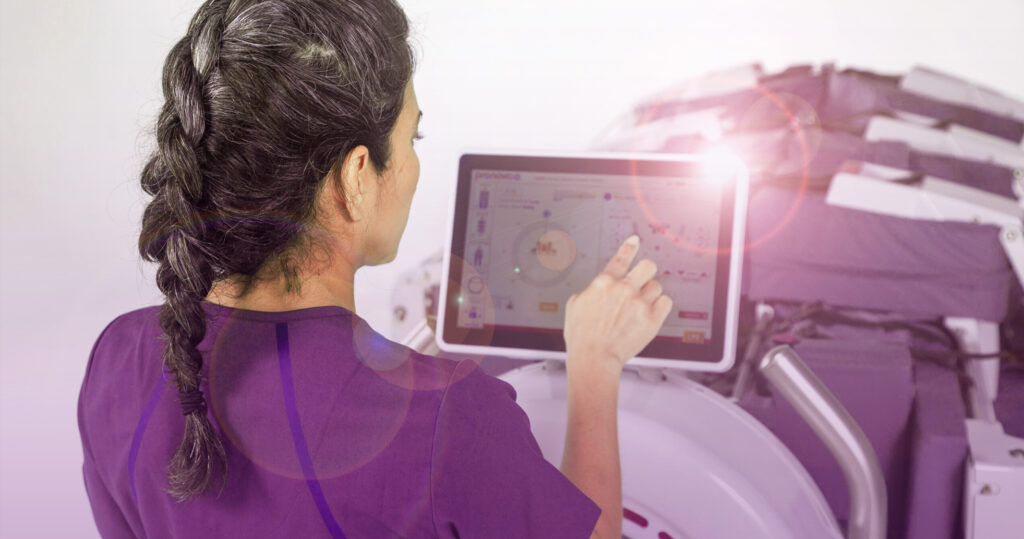
The Pronova-O2 system (by Turn Medical) offers several features that align strongly with nurse retention & recruitment goals:
- Reduced Physical Burden / Lift Injury Risk
Proning a patient manually is labor intensive, involves significant physical effort, and risks injury to caregivers. Pronova-O2 allows a single clinician to make prone/supine position changes, reducing the physical strain and risk of staff injury. - Injury Prevention for Patients → Reduced Stress for Nurses
The system includes the InteliDerm Powered Skin Protection System, which helps mitigate the risk for pressure injuries (face, chest) when patients are proned. Fewer pressure injury complications means less urgent corrective care, less guilt/moral distress, and a potential reduction in the cost to treat patients. - Efficiency & Task Reduction
Because the system is automated, has no removable parts, and is designed with clear guides (placement guide, reference guide, intuitive labels), it reduces staff needed to safely move critically ill patients, reduces time spent on positioning tasks, and simplifies workflows. - Support for High Acuity Settings
In ICUs, transplant cases, ARDS, etc., where proning is necessary, Pronova-O2 can help reduce workload per patient, allow staff to manage more safely, which is especially important when nurse-to-patient ratio and hospital census are high or staffing is lean. - Recruitment Appeal
Nurses considering where to work often ask: Will I be safe? Will I be respected? Will I have tools that help me do my job well (not make it harder)? Working at a facility that uses tools that reduce physical strain and improve patient outcomes can be attractive.
Potential Impact: Retention & Recruitment Metrics
By integrating Pronova-O2 (and similar innovations), facilities can expect to see improvements in:
- Reduced rate of caregiver injuries and resulting leave / turnover
- Fewer pressure injuries, fewer complications that require intensive rescue work
- Better job satisfaction among staff, less moral distress, fewer complaints about physical workload
- Improved new nurse retention (if early in career nurses are not “burned out” by the heavy lifting or crisis moments)
- Enhanced reputation as a “technology forward” employer, which can help in recruiting candidates who want modern, efficient tools
Conclusion
Nurse retention and recruitment are no longer just HR issues — they are deeply tied to how care is delivered, how much burden is placed on front-line staff, and whether the work environment empowers with tools, safety, and efficiency.
Automating manual processes using technology like Pronova-O2, when used correctly, can shift the daily balance for nurses: from fatigue and heavy workload toward efficiency, safety, and more meaningful time with patients.
Health systems that embrace technology — guided by nurse input, designed to reduce physical strain, and proven to improve patient outcomes — are better positioned to retain their teams and attract new talent. Innovation can no longer be viewed as a “nice to have”; it is essential to building a sustainable healthcare workforce.
- Twenter, P. (2025, September 15). Pressing nurse retention issues, tips: 7 health system leaders. Becker’s Clinical Leadership & Infection Control. https://www.beckershospitalreview.com